Case Study
Trupay
Led product discovery resulting in loyalty features with up to 79% early adoption and improved user security.
SUMMARY
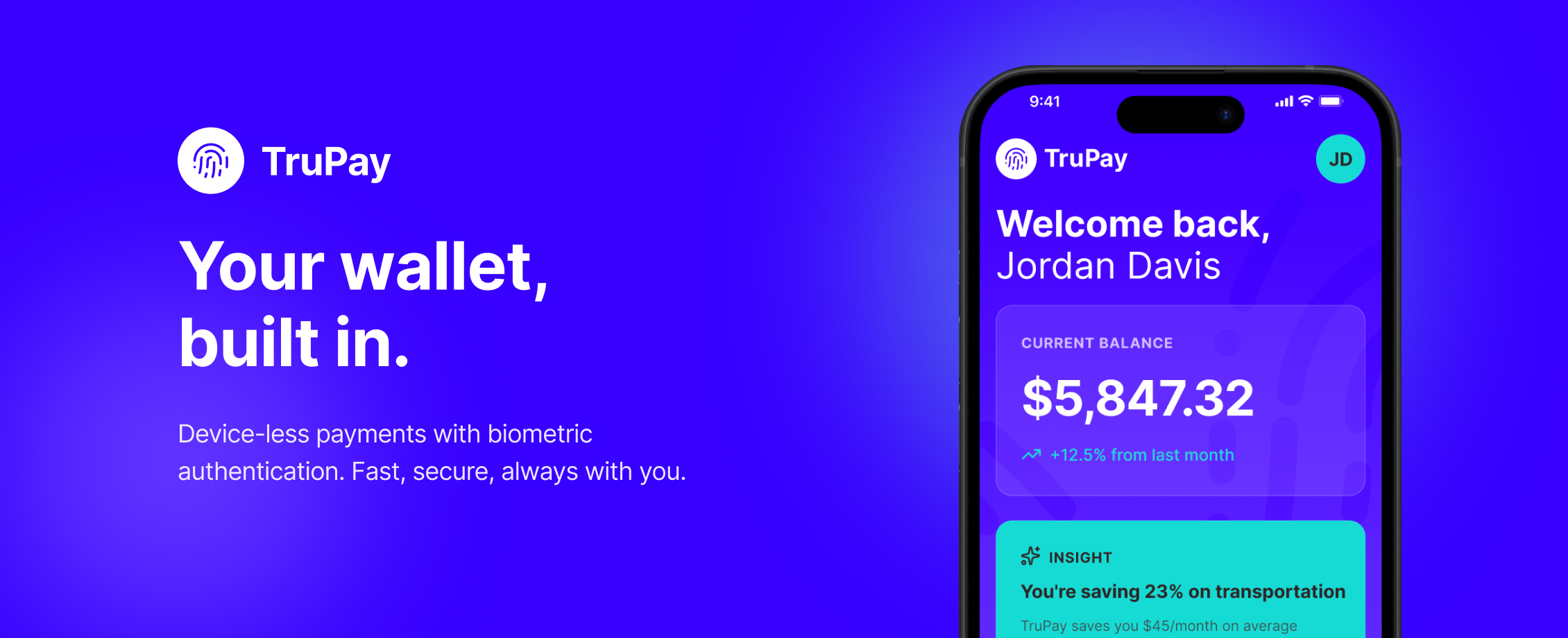
TruPay is a biometric payments startup replacing phones and cards with thumb, face, or corneal authentication. Designed to integrate with ultra-modern POS systems like customer service humanoids or as attachments to current cashier systems. Promotes safety in robotics enabled restaurants, gas stations, airports, and more. Enables device-less transactions while offering rewards and fraud protection.
Target users
Tech-forward urban shoppers valuing speed
Security-conscious consumers worried about theft/fraud
Retailers and POS partners seeking faster checkout and loyalty integration
Business goals
Shorten checkout time and boost conversion
Reduce fraud and chargebacks with biometrics
Drive revenue via targeted offers and merchant adoption
Core problem solved
Users have relied on removable payment devices that can be lost, stolen, or hacked. TruPay embeds the wallet in biometric identity to enable faster, more secure, device-less payments.
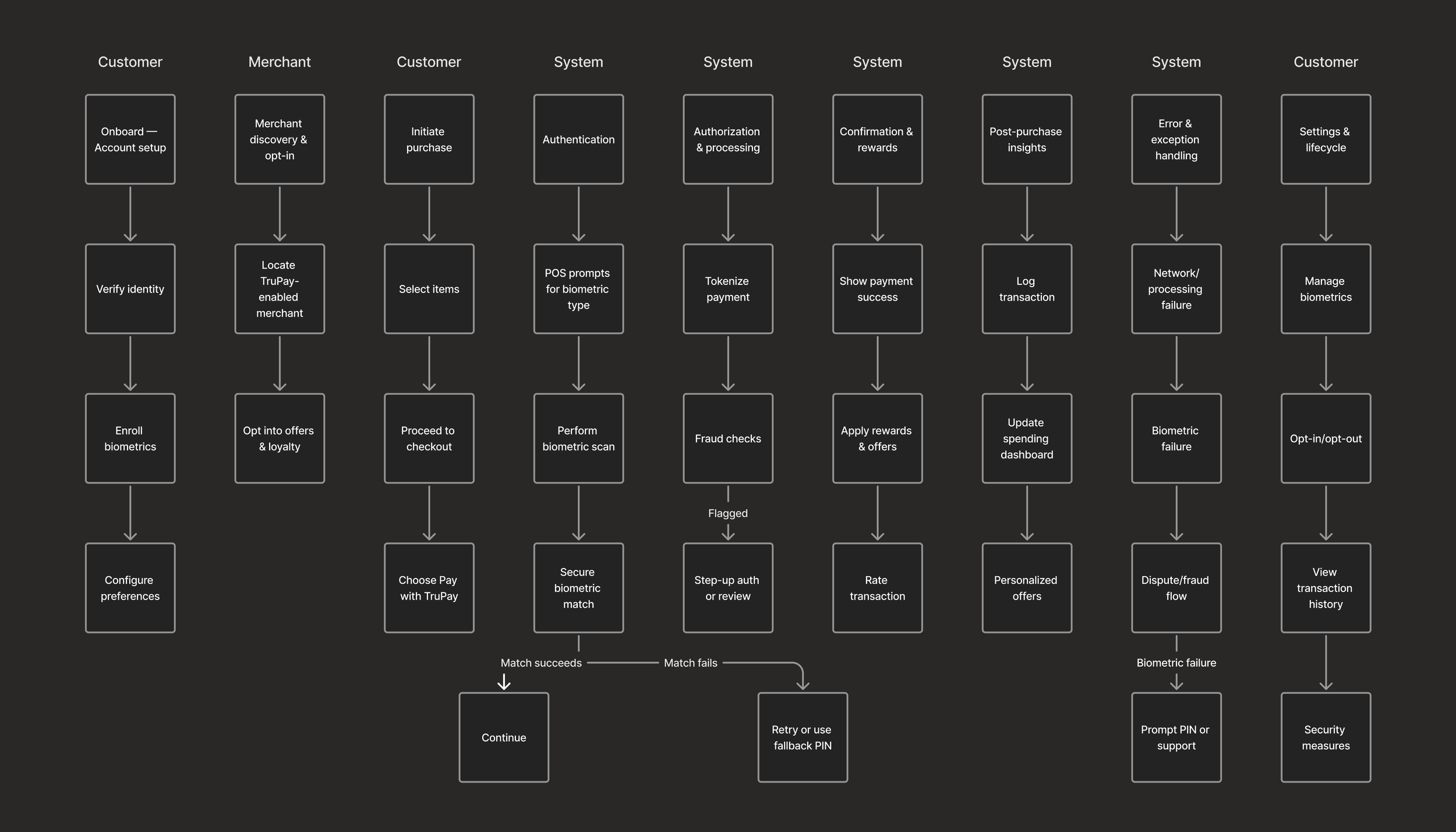
User flows
Key UX requirements
As a customer, I want biometric checkout for secure authentication so my payments are protected without carrying cards or phones.
As a merchant, I want a kiosk attachment that supports biometric scanning so I can accept TruPay payments at existing POS terminals.
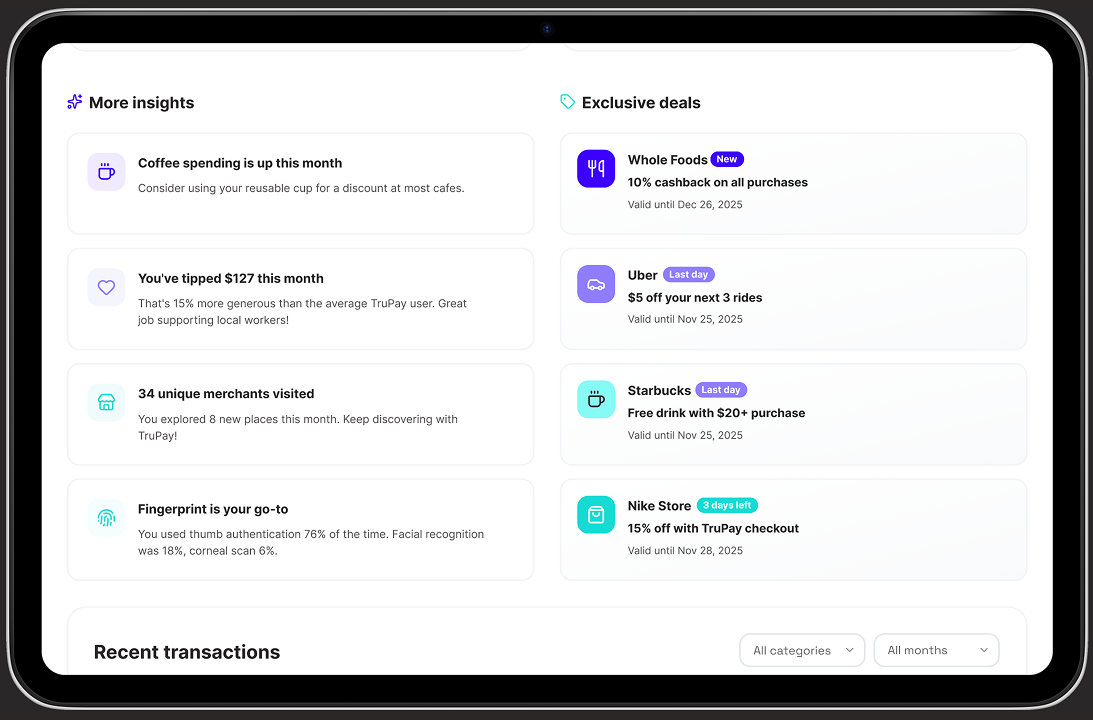
As a customer, I want automatic rewards and personalized offers after each transaction so I earn value and discover relevant deals.
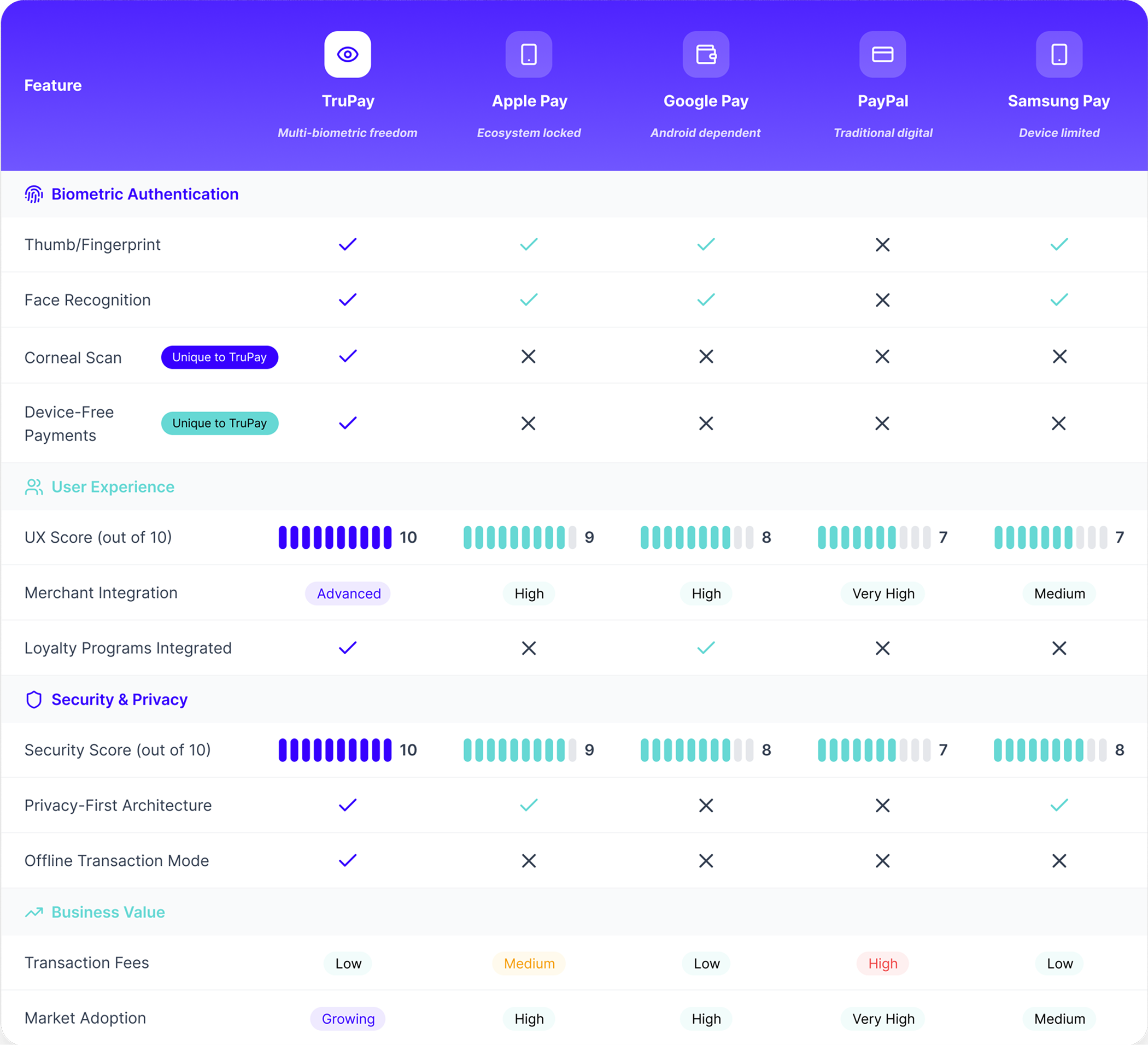
Competitive analysis
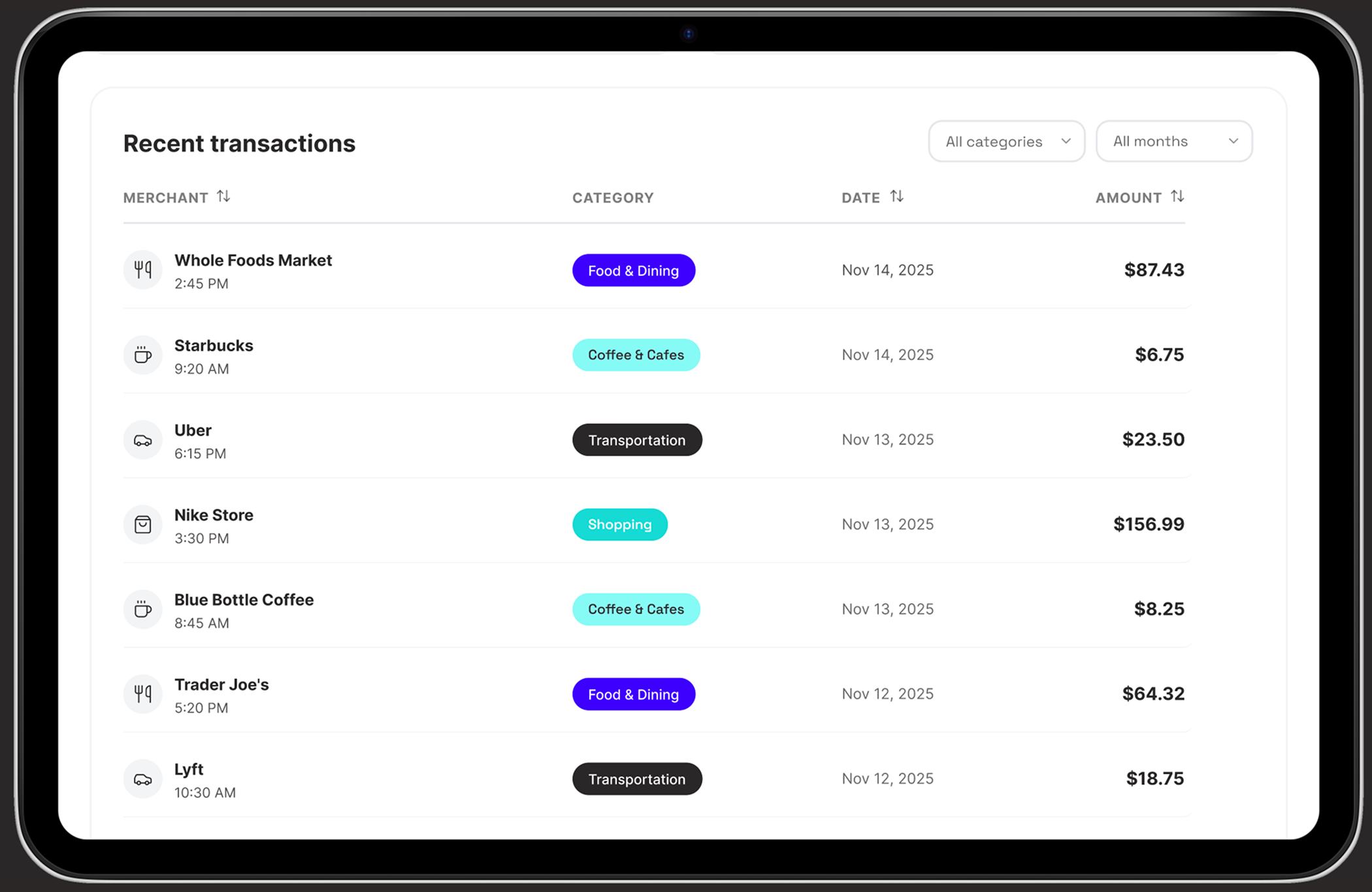
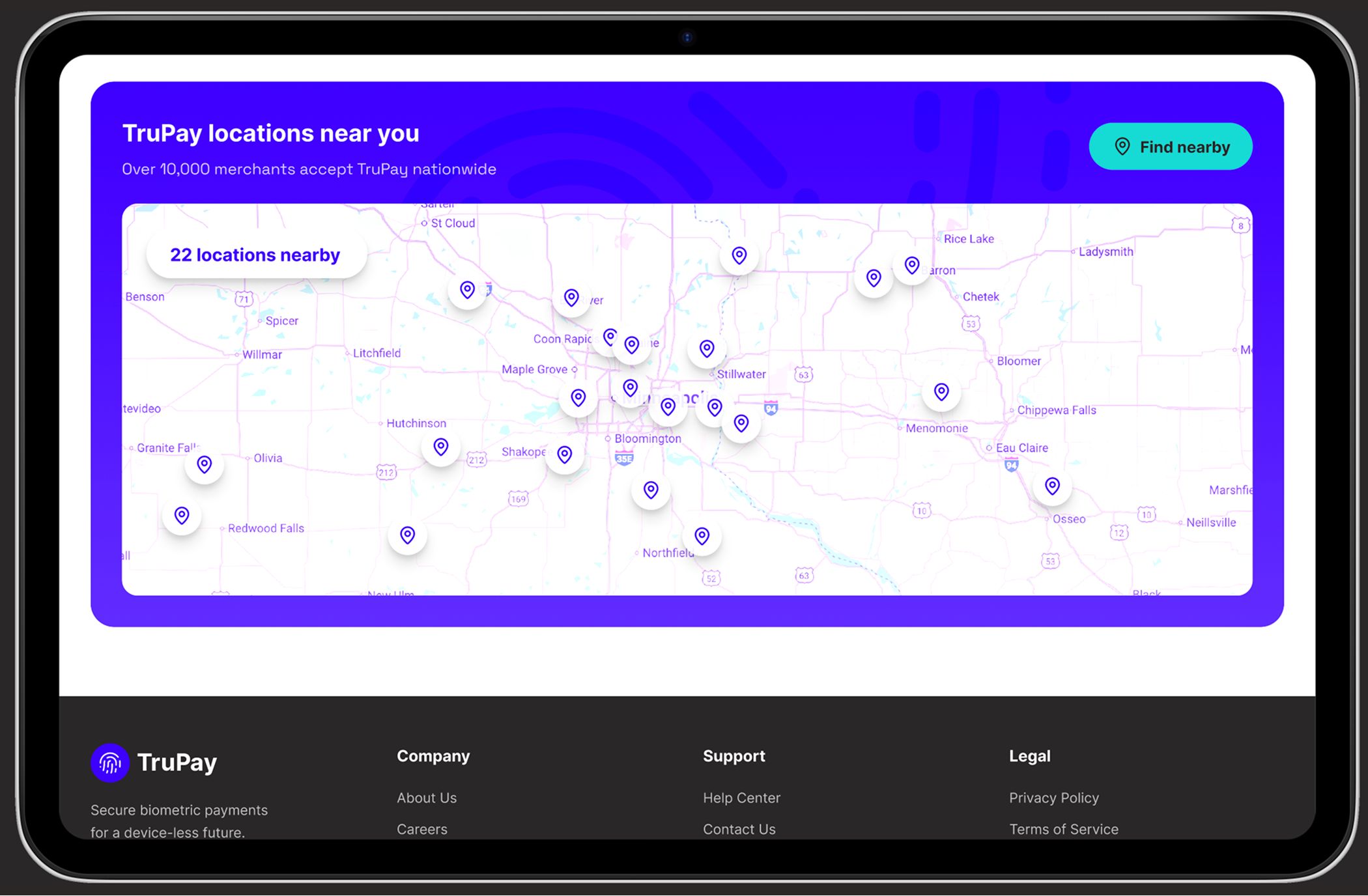
Tablet design
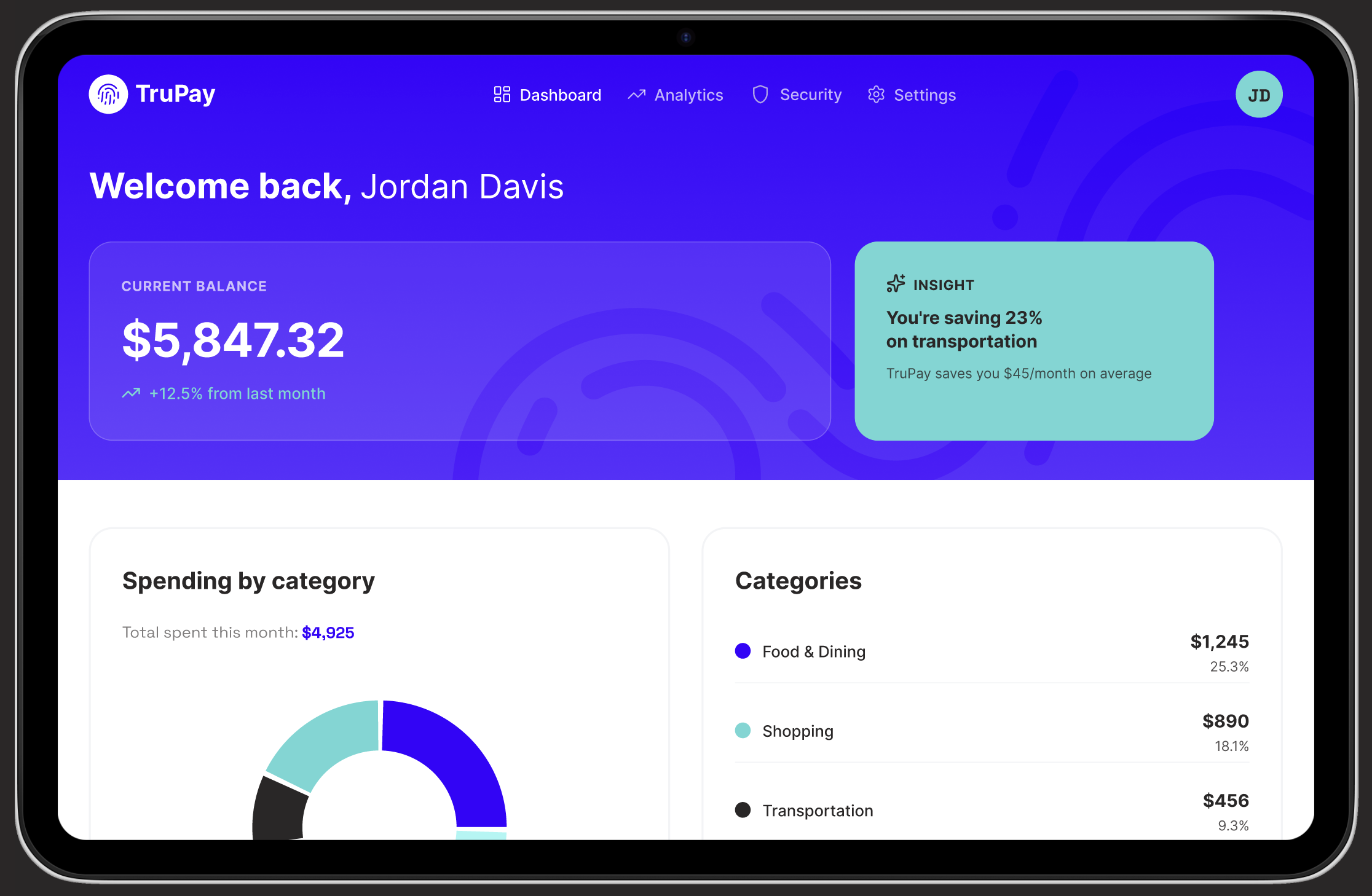
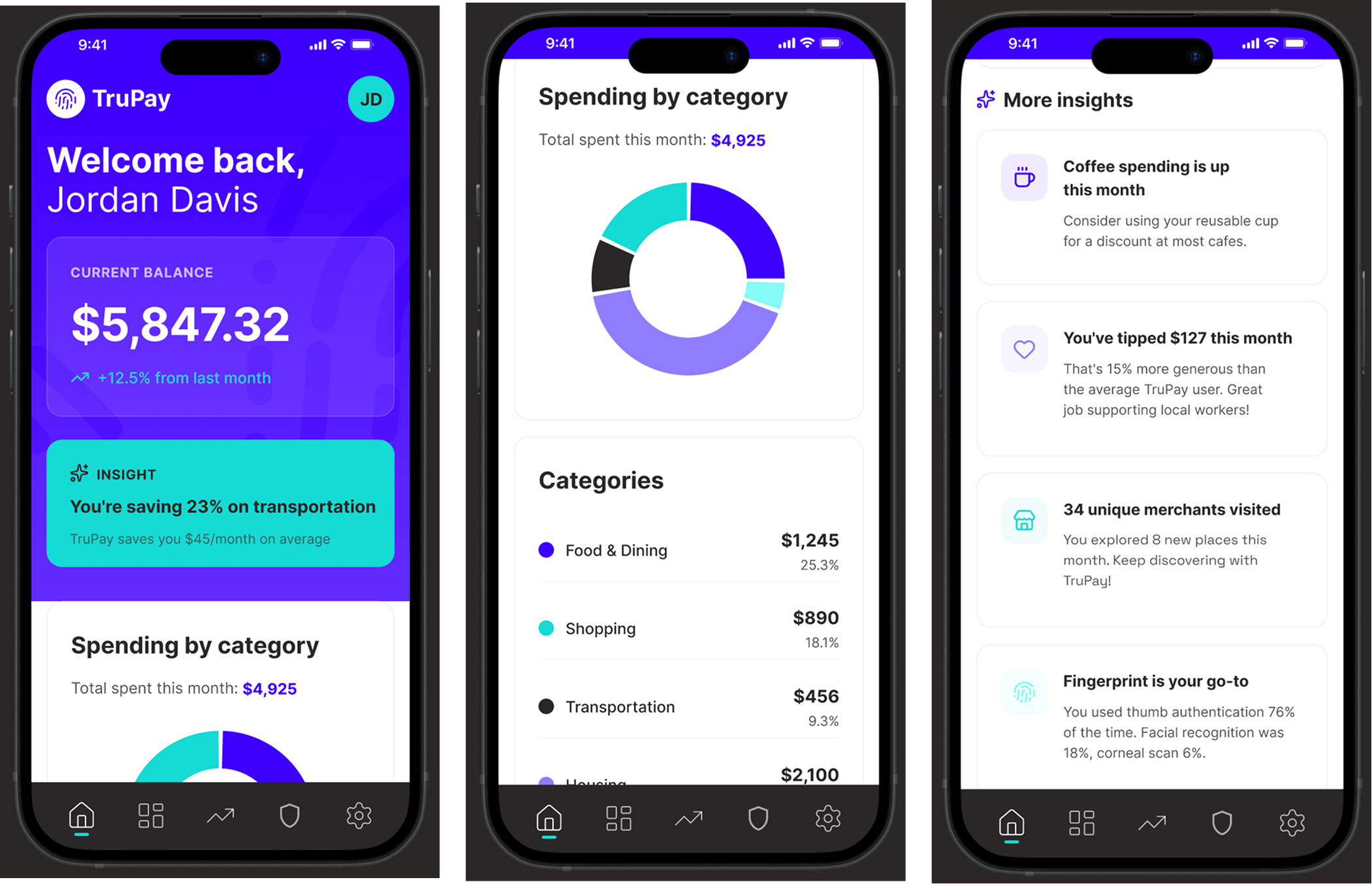
Mobile Design
Reflection
Lessons learned: User feedback highlighted the importance of clear communication around security features. Engaging users in testing revealed opportunities to enhance navigation and streamline the payment process.
Improvements: Focus on simplifying the onboarding experience for new users—especially concerning biometric setup—to reduce any friction encountered. Additionally, refining the personalized rewards system for better relevance could enhance user satisfaction.
Open questions: How can we further enhance the accessibility of biometric features for individuals with diverse abilities? What additional incentives could increase user engagement and loyalty?
Next steps
Launch the next version of the app with improved user onboarding and clearer security explanations.
Conduct further usability testing specifically targeting diverse user groups to ensure inclusivity.
Explore additional biometric options and alternative authentication methods to enhance user choice and security.
While this case study is conceptual, it embodies years of iterative project refinement and insights from industries I’ve contributed to.